Many of you might remember my blogpost from two years ago, "What Has to Be Done." That post, and the talk I gave alongside famous blogger Heather Armstrong (of dooce.com) brought over 30,000 new readers to my blog. What a hard time that was. As I suffered through the pain of my surgery and the side-effects of the intensive antibiotic therapy, I wondered whether my plans to finish my PhD were evaporating. I questioned whether my mobility might be forever impacted by the surgery and the persistence of the infection. I marveled at the support of my family and my community even as I worried about John's ability to hold together our lives while my health was so fragile.
About a year ago, I faced another moment of "what had to be done" when local LDS leaders chose to summon my spouse to an ecclesiastical court. I attended that event to testify on his behalf, and also to observe the events closely. It was a time when my own relationship with the church was tenuous, and seeing how this event proceeded was a significant step in my realization that I could no longer be an active adherent of the Mormon faith. Lately many of those feelings have been bubbling up again--I drive past the temple and the local LDS meetinghouse almost daily, which serves as a constant reminder of the church's impact on my life. Even now I remain cosmically disappointed in the Mormon church and its leaders (on all levels--local, regional, and global), despite supporting my friends who are members. I feel a rather irrational amount of anger at the group of men who conducted John's church court proceedings, especially because they were people in whom I'd once placed a great deal of trust. Distancing myself from the church wasn't because I was "offended" by these leaders, it was that I could no longer put my faith in an institution where leaders could wield so much power (such as the power to sever my sealing to my spouse) so irresponsibly. Choosing to walk away from my LDS community was hugely difficult for me, given all that I had invested in the church through the years.
On July 25th this year (in sharp contrast to July 25th two years ago when I was being re-admitted to the hospital for my leg infection), I was in Fairfax, Virginia meeting with a group of twelve digital humanists to embark on a radical tool-building experiment. My colleague Effie, described our process on her blog today as "doing what needs to be done" (see the last paragraph). I loved that she said that, because I hadn't thought of our fast-paced development process in that way until now. That phrase helped me to see the connective threads in my life from a point two years ago when I was purely in 'survival' mode, to the point that I'm at now with an abundance of opportunities ahead. I feel as though the lessons I've learned since then continue to serve me in my scholarly and creative work, as well as in my spiritual life. For now, "what needs to be done" is to focus on my dissertation while juggling an exciting array of side projects and the needs of my family (as well as squeezing in plenty of time out paddling on the ocean and time for quiet contemplation--sometimes simultaneously). I feel so fortunate to have the health and confidence to move forward with my dreams. These past two years have taught me much.
Showing posts with label making history. Show all posts
Showing posts with label making history. Show all posts
8/17/2010


8/08/2010
goal-setting
Recently I heard someone make a funny comment about blogs. They said that every time they'd ever seen a blogger write a post saying that there were going to start posting more often, it never happened. I suspect that I am guilty of that myself. Not so much in this space, where I seem to have a compulsive need to spew my thoughts out over the keyboard, but much more so on my History blog. However, as much as it might not work that blogging about the need to blog more does not actually inspire one to blog more frequently, I believe that blogging about goals can introduce a level of accountability that really can work. For example, an exercise blog that I participated in a few years ago is what got me into shape after my leg surgery.
So this afternoon I just made some calculations about the biggest looming-out-there goal that I need to accomplish. I want to finish my dissertation. Sooner rather than later. By that, I mean that I want to finish it by my next birthday. At the end of May. I have all kinds of motivation to do so. There's that UCI tution that's costing me $12,000 per year. There's the knowing that the longer it takes to finish, the less likely it is that I will finish. There's that wild crazy dream of have of putting those little letters by name to show that I finished. And, there are these history stories that I've been wanting to tell for too many years now.
So....my rough calculations tell me that I have 45 weeks to knock this thing out. I think I can do it. I've just learned what I can accomplish in One Week, and now I have 45 of those!
But can you help me? Can you offer advice and ask me how things are going? I'm going to post many of my daily and weekly goals on Twitter. If you hang out in that space, can you follow along and give me some support?
So this afternoon I just made some calculations about the biggest looming-out-there goal that I need to accomplish. I want to finish my dissertation. Sooner rather than later. By that, I mean that I want to finish it by my next birthday. At the end of May. I have all kinds of motivation to do so. There's that UCI tution that's costing me $12,000 per year. There's the knowing that the longer it takes to finish, the less likely it is that I will finish. There's that wild crazy dream of have of putting those little letters by name to show that I finished. And, there are these history stories that I've been wanting to tell for too many years now.
So....my rough calculations tell me that I have 45 weeks to knock this thing out. I think I can do it. I've just learned what I can accomplish in One Week, and now I have 45 of those!
But can you help me? Can you offer advice and ask me how things are going? I'm going to post many of my daily and weekly goals on Twitter. If you hang out in that space, can you follow along and give me some support?
6/10/2010
As busy as a...bunny?
I'm working on gathering the statistical information for the maps that I'm making this week, and I just encountered the image above in a scanned googlebook from the 1870s. It actually gave me the creeps--like those goosebumps that I get on the back of my neck when there's an odd breeze blowing through an empty room. And it sort of reminds me of the creepy nineteenth-century spiritualist images, too...
PS: The bunny reference has to do with the overabundance of the creatures on this campus. Being very careful of the ones with fangs, I promise!
3/14/2010
philia

I am drawn to people with passion and vision. That's much of the reason that I started my podcast--because I wanted to have conversation with people who share my history-lust. Talking to such people causes me to fall in love with my chosen profession (and the whole entire world, for that matter) all over again.
I was similarly drawn to the passion shown in Wallace J. Nichol's Oceanophilia post (thanks @hallnjean) about ocean-love and neuroscience. He writes:
We humans offer up our dreams, our secrets and our treasures to the sea from whence we came...What is it about the ocean that speaks to us on such a fundamental, profound human level? I have always wanted to know, but my chosen profession, science -- skeptical, detached, dispassionate science -- wouldn't allow me to go there.
When I was a graduate student, I tried to weave that big human Love into my dissertation on the relationship between sea turtle ecology and coastal communities. No luck. My advisors steered me to other departments, another career even. "Keep that 'emotional' stuff out of your science, young man," they counseled. Emotion wasn't rational. It wasn't quantifiable. It wasn't science...
We must seize this particular moment in time -- when the nascent power of neuroscience is burgeoning and the popular momentum is toward conservation rather than exploitation. We can use science to explore and understand the profound and ancient emotional and sensual connections that lead to deeper relationships with the ocean. I believe that if we do that we have an opportunity for real conservation gains that could do some true and lasting good for the ocean and planet Earth.
It's time to drop the old notions of separation between emotion and science. Emotion is science. Let's convene the top marine scientists, skilled communicators, dedicated conservationists, and leading neurobiologists and cognitive psychologists to ask and answer the most probing and compelling set of questions about the ocean that we can imagine. Let's explore the mind-ocean connection -- oceanophilia.
His thoughts about oceanophilia echo many other things that are whirling around in my brain this morning. In just a few hours I will abandon all of the tasks on my list and head out for a few hours on my outrigger. To let the ocean tug and push me as she may, while I paddle, paddle, paddle. The connection with the water will stretch and pull me into balance once again.
And at the same time, I'm thinking a lot about my experience yesterday at THATCampSoCal (a tech-humanities un-conference). A primary theme running through the day was how to forge (and control) one's online identity in a way that will be an asset in the pursuit for a tenure-track job. The hiring and promotion practices for historians are so capricious. One certainly can't second-guess all that happens behind the scenes in such interactions. While I want to be thoughtful and careful with my online presence, the thought of having an imaginary search committee governing my actions is so much like the way I used to think about Mormon God--the attempt to "please" someone who was so remote and nebulous and judgmental--it had the hair standing up on the back of my neck.
Instead, I want to throw myself into my life. Letting my passion and my curiosity drive my choices and my research. I expect that I will make mistakes. I suspect that I will be accused of "not doing it right." I suspect that I may never get tenure. But I need poetry and art and sunshine (and moonlight). I need waves that pull and bump and threaten me. I need to tell my stories without worry about how they will affect my job security.
The internet has been my playground for the past decade--just because academia has finally found it, too, I don't want to lose the immediacy and the thrill of this space.
And, below, another link I just had to share (if only because of my long-time crush on Bill Nye):
3/10/2010
Daily Cuppa
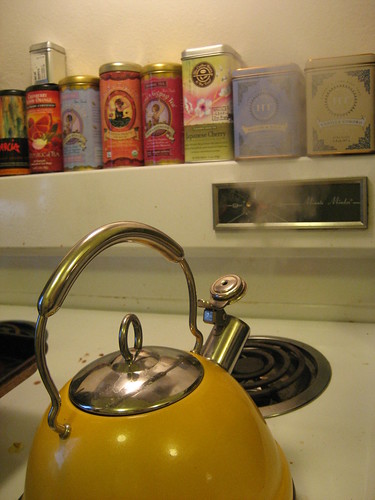
This evening a friend dropped by and we shared some tea & scones after dinner. It wasn't until about after an hour of chatting that I realized that I've been so crazy-intensely busy lately that the luxury of having a friend over for a cup of tea simply hasn't been on my agenda. It's no wonder, perhaps, that I've been waking up in the morning with a tight jaw, after I've been dreaming about lists of "To-Do" all night.
So I'm trying to reincorporate some space for peace and relaxation. Adding meditation. Walks. Sitting time in the garden. It won't be easy with the schedule that I've got over the next few weeks, but I know I need to keep the balance in my life. (poetry, I hear you calling my name....)
For those of you who have missed my regular postings here, you might want to drop by History Compass or take a listen to one of my recent podcasts.
2/08/2010
Bridges
Cross posted at History Compass
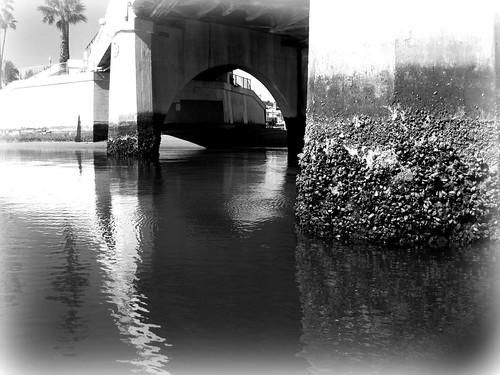
Since I started paddling an outrigger canoe through the Newport harbor, I've gone under a lot of bridges. I learned, very quickly, that the current around bridges can be unpredictable--even dangerously so. In my small boat if I hit a bridge it means that I'll likely end up going for an unintentional swim and the blow from hitting a cement pylon can easily cause irreparable damage to my fragile canoe.
As I paddled under a low-lying bridge last week and heard the uncanny echo of water and wind through that space, I realized why trolls always live under bridges in folktales. Bridges are important places--necessary crossroads. But they are also liminal places where danger lurks. It might be in the form of a malintentioned someone hiding in the shadows, or it might be a whirl of current that pulls the boat toward a cement piling encrusted with mussel shells. Whatever the possibilities, bridge-crossings demand heightened attention.
Like the dangers of the bridges that I face as I paddle around segments of the harbor, there seem to be trolls lurking around the bridges of academia, too.
Since I started paddling an outrigger canoe through the Newport harbor, I've gone under a lot of bridges. I learned, very quickly, that the current around bridges can be unpredictable--even dangerously so. In my small boat if I hit a bridge it means that I'll likely end up going for an unintentional swim and the blow from hitting a cement pylon can easily cause irreparable damage to my fragile canoe.
As I paddled under a low-lying bridge last week and heard the uncanny echo of water and wind through that space, I realized why trolls always live under bridges in folktales. Bridges are important places--necessary crossroads. But they are also liminal places where danger lurks. It might be in the form of a malintentioned someone hiding in the shadows, or it might be a whirl of current that pulls the boat toward a cement piling encrusted with mussel shells. Whatever the possibilities, bridge-crossings demand heightened attention.
Like the dangers of the bridges that I face as I paddle around segments of the harbor, there seem to be trolls lurking around the bridges of academia, too.
1/27/2010
My blogging life
Cross-posted at History Compass
Three years ago I outed myself as a blogger--to both the folks in my department and beyond, as I started using my real name online in places that could link back to my identity as a graduate student. Prior to that, my blogging was something that I did on the side, pseudonymously. However, for a variety of reasons, it seemed time to meld my online and real-life identities.
Two years ago I wrote a post on my History blog about the "seduction" of the blogging life, and how it was an asset to my work as a scholar. I explained,
Three years ago I outed myself as a blogger--to both the folks in my department and beyond, as I started using my real name online in places that could link back to my identity as a graduate student. Prior to that, my blogging was something that I did on the side, pseudonymously. However, for a variety of reasons, it seemed time to meld my online and real-life identities.
Two years ago I wrote a post on my History blog about the "seduction" of the blogging life, and how it was an asset to my work as a scholar. I explained,
Yet what I find the most seductive about blogging is the continued experimentation. It's a challenge to find something new to say every day and to find new ways of saying it (especially when my life is just a mundane mix of grad school, parenting, and spiritual seeking--it's hard to imagine more boring story fodder). So I have to think about how best to 'hook' my readers, how to provoke a response, and how to write with such skill that my posts are linked by larger blogs.
1/15/2010
the conversation
Came across this quotation on a humanist listserv this morning and just had to share:
From Kenneth Burke's,"The Conversation of History":
Imagine that you enter a parlor. You come late. When you arrive, others have long preceded you, and they are engaged in a heated discussion, a discussion too heated for them to pause and tell you exactly what it is about. In fact, the discussion had already begun long before any of them got there, so that no one present is qualified to retrace for you all the steps that had gone before. You listen for a while, until you decide that you have caught the tenor of the argument; then you put in your oar [or, your padddle]. Someone answers; you answer him; another comes to your defense; another aligns himself against you, to either the embarrassment or gratification of your opponent, depending upon the quality of your ally's assistance. However, the discussion is interminable. The hour grows late, you must depart. And you do depart, with the discussion still vigorously in progress.
Kenneth Burke, The Philosophy of Literary Form (1941)
12/01/2009
on being haunted, by history
For those of my readers who are interested in my history writing, here's an excerpt from a recent History Compass post:
I’m a historian because I’m haunted. The words and names from the archives surface in my thoughts and dreams…as I immerse myself in their world, their stories become mine. Am I like a clan storyteller, curating and re-telling the memories from long ago? Or am I merely that eccentric cat lady with no life of her own, her piles of papers and a worn laptop offering ample space for escape from the real world? Though I now sit in an overstuffed chair in my suburban living room with the ambient sound of a lawnmower outside, I am not really here. I am at the sickbed. Hearing a young child’s chest heave and rise, reminding me of my son.
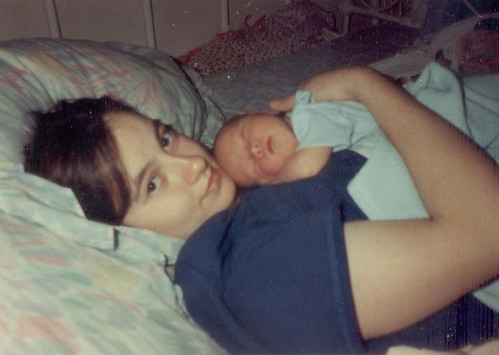
The cough brought our pediatrician running down the hallway. It was the third time I’d brought in my newborn baby out of concern for his stuffy nose and congestion. He had stopped nursing. There was the faintest tinge of blue at the corners of his lips.The specter in my research today is not pertussis, but a different letter of the vaccination alphabet. The “D” for diphtheria is hovering around my living room as I shuffle through the account of physicians’ failed attempts at treatment. The disease called the “strangling angel” caused leathery membranous wings to grow in the throat, eventually coating the mouth, nasal passages, and windpipe. Its sounds are much like those that I remember from pertussis: the forced breathing that is dreadful, but not as dreadful as the silence. Those long moments when all sound stops.
Dr. Yu speedily unzipped my son’s pajamas, and placing a stethoscope over his tiny chest and heart. Then stepped back for a moment, watching the labored rise and fall of our son’s breathing, his ribcage dipping down nearly to spine each time he coughed. We all watched. Each intake of air a deep gasp from within his belly. What happened next is a blur of memory, my fear eclipsing exact recall. A rush to the nearest Children’s Hospital and an exam by an infectious disease specialist. Isolation due to the risk of contagion. Learning that our son was infected with a disease that was often fatal, with a name that only faintly registered in my memory: pertussis. As we were to learn later, it’s the “P” part of the DTP immunization that most babies receive at their two month checkup. Our baby was only four weeks old.
Click here to read the entire post.
10/12/2009
follow...
My travels have kept me so busy this past week, I've rarely had time to sit down and write a blogpost. However, I'm tweeting regularly from the road, so feel free to follow me to keep up on my latest adventures.
Today, for example, will undoubtedly be my most interesting archival/research experience ever...so you'll want to stay tuned! :)
Today, for example, will undoubtedly be my most interesting archival/research experience ever...so you'll want to stay tuned! :)
7/23/2009
off and on
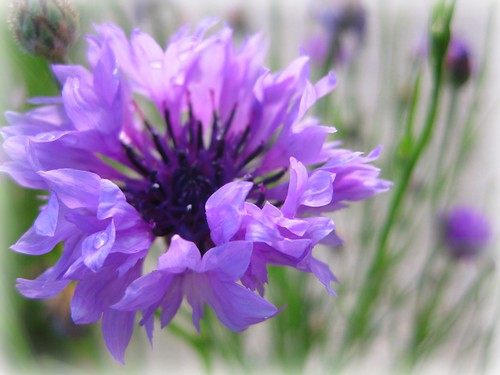
Being a scholar, an "academic," allows me to meld my daily life into whatever I study. Even the most mundane of experiences can augment the way that I'm approaching a question or a problem that I'm seeing in my historical work. I see this as an asset, as an important skill that I bring to the table. However, it can also be a bit wearying. I feel the weight of the unfinished dissertation pulling me constantly. It's always there in the back of my mind, even in my most carefree of moments.
I tend to be very good at "turning off" the dissertation mind on weekends--meaning I can put my work behind me and just enjoy the family or the garden or some solitude. But on weekdays I'm not so good at it. There's just always more I should be doing, or at least I feel that weighing into my decision-making.
One reason I love being out on the water with my outrigger team is that when I'm handling the boat, I don't have the mental space for the dissertation. It's just 'gone' for those few hours. There's a lightness and freedom in that. But as soon as I'm off the ocean, it's there again.
I'm not complaining. I love my life, I love being engaged in my work. I love graduate school--fiercely, even. But sometimes I wonder how the constant pull & tug of stress makes it difficult for me to enjoy the now and is a barrier to saying YES to today and this moment.
For those of you who've taken a similar path, can you offer any advice?
1/26/2009
1/22/2009
1/09/2009
the side benefits of making history

The job prospects for historians are pretty grim these days. I don't know if all my hard work from the past few years will yield a position when I'm done, but I'm trying not to think too hard about that just yet. I'm just concentrating on enjoying each day of grad school and maximizing the many opportunities that come my way.
The catalysts for our family trip to the East coast were my research in DC-area archives and my attendance at the annual AHA Meeting in NYC--both of which were fantastic experiences. There might not be much money in pursuing a career in history-making, but the travel benefits are terrific. Most of my trips this past year have been related to my archival work and I have enjoyed all of them. Some days I pinch myself even as I wonder how I could be so fortunate.
12/04/2008
my historian life

This is me, as I look most of the time (well, maybe not in these particular clothes because I do attempt to shower and change my clothes on most days). Here I'm sitting on the bed typing away on my beloved "junebug" computer.
This is the business of history-making: the long hours spent at keyboard and/or reading. These days I read a minimum of one book per day and I try to write at least two pages daily on my dissertation. I love my work and my life. I'm so lucky to be well-funded and able to pursue this fascinating line of research (and my diphtheria stories make such great party talk!).
For those of you who are still reading(!), you might enjoy my recent ruminations today on my history blog...where I discuss the process of "making collaborative butter sculptures" (do you think I've had just wee bit too much work and no play lately???).
:)
(photo by John)
11/04/2008

10/24/2008
because I am a dork
So it's Friday night and I'm sitting at home reading this book (that hasn't been checked out of the UC system libraries since 1995) and taking notes. Because I am a special kind of dork that's called a history PhD student.
10/06/2008

9/11/2008
a successful day
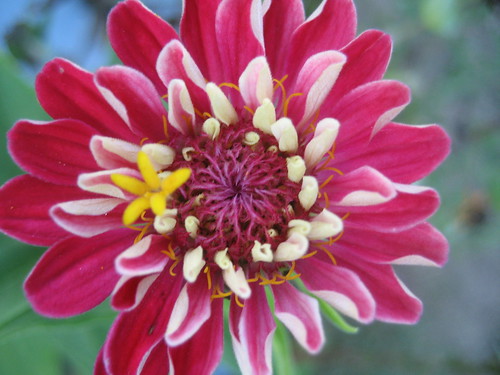
I snapped the photo of the zinnia above while an adventure with Sara in Concord, Mass. last year. We had a nearly perfect, even 'transcendent,' day as we adventured all 'round the historical sites. Well, I've made my plans and I'm going back again in two weeks(!)*
But let me tell you a story before I spend a few moments reveling in the magic that will be my cross-country trip...
One of the joys of being a History PhD student is that I am now spending many of my days thumbing through the aged papers of fascinating people from long ago. My latest research subject is a woman who lived in Andover, MA in the 1860s-1880s. Today, as I read through her journals, I came across this entry (and can I just add that everyone around me in the rather stuffy reading room at the Huntington Library undoubtedly thought I was having far too much fun when I was grinning ear-to-ear as I happened upon this entry):
3 July 1875
“The day was lovely and Miss Carter and I took our long-talked-of trip to Concord. We were favored in finding a barge starting from the Concord station directed by a Mrs. Brooks, who had guided people about C. for a long time. We went to the library saw fine busts of Miss Alcott and Hawthorne, then drove out to points of historic and literary interest. We saw the spot where a peaceful purchase secured the site of the town from the Indians in 1636, the bullet-stricken houses and the battle-field, and the wonderful minute-men, with one hand on the plough and the other grasping a gun a perfectly life-like figure. We clambered about the hill back of Hawthorne’s and Alcott’s houses; there seemed just space cut out of the old woods for a comfortable breathing for two houses, and paths under the deep shade. We could only go into the Hawthorne where we climbed to his high study and stood at his standing desk: we climbed through the woods to his look-out but found the ladder so out of repair that we could not go up the tree. We saw the Old Manse and Emerson’s house, but could not go to them. I was much impressed by a street of houses over 200 years old: the thrifty farmers had kept them all along in such good repair that they did not look old. We were left to pass some extra hours in Sleepy Hollow we ate lunch. The rose-quartz on Emerson’s grave and the graves of Hawthorne and the Alcotts’ we reverently saw and the restfulness of the scene was a refreshment to us. We reached home about 7 after a successful day.”
BTW, I definitely want to meet you Bostonian blogfolk while I'm in town. Do drop me a line (phddillyATyahooDOTcom) if you're game. Also, can anyone suggest a groovy cafe near a T stop for a meetup?
*The woman whose papers I am studying, when she's being sarcastic, she adds an exclamation point in parentheses at the end of her sentences. Unbelievable. I thought only weirdo bloggers(!) like me did that.
8/26/2008
music tuesday (with a giveaway!)

When I went looking for some intro music for my history podcast last year, my grad student friend RJohn Williams willingly allowed me to copy some chunks out of his band's song "I Fell off My Name." Whenever I hear this song now, I get a little thrill, because it's "my song," too--I've listened to it over and over and over again as I've mixed my podcast tracks.
On Saturday night I watched Faded Paper Figures play their first-ever live gig. It was a lot of fun to see RJohn behind the mic, when I'm used to seeing him in grad student mode. Faded Paper Figures seems to be doing quite well, and I suspect that RJohn might have a career as a rockstar rather than as a professor (although why not do both, right?).

Therefore, this week's giveaway is a copy of FPF's new CD, "Dynamo." If you'd like to be entered in the drawing, please leave a comment below telling me what your dream career is: rockstar, artist, novelist, lion tamer, etc.
Me, my dream career would be to be the next Studs Terkel. I love hearing people tell their life stories. Interviewing historians for my podcast is such fun, as is my time spent in the archives reading centuries-old letters and journals of people who are long dead, but continue to live on through the written word.
Subscribe to:
Posts (Atom)


